

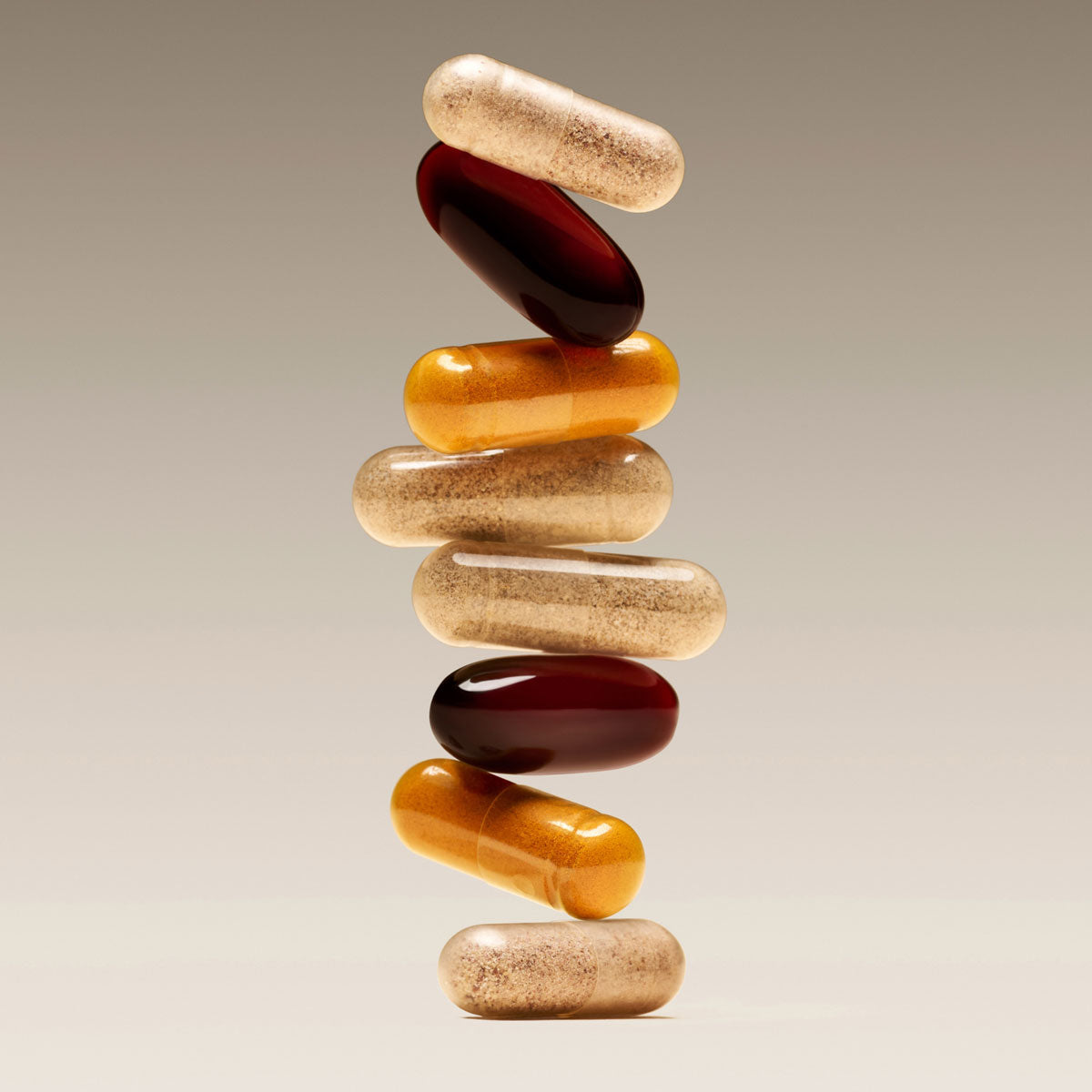


Ingredient Spotlight: AprèsFlex®
|
|
Time to read 6 min
|
|
Time to read 6 min
Not all Boswellia is the same, and the difference can mean everything for how well it actually works.
For thousands of years, the resin of the Boswellia serrata tree has been used to help support joint comfort and ease of movement.* Modern research has zeroed in on why:
A family of six compounds called boswellic acids, and one in particular, AKBA, has drawn the most attention as the most biologically active of the group. It's also the compound that varies most dramatically from one Boswellia product to the next, which is why two supplements with "Boswellia" on the label can deliver wildly different results.
AprèsFlex® was developed to solve that problem. It's a patented, standardized Boswellia serrata extract designed to deliver a consistent, highly bioavailable form of AKBA in a low daily dose, so you know what you're getting in every capsule.
It's the featured ingredient in our own Dynamic Joint, where it helps support joint comfort and normal joint function as part of a daily wellness routine.*
This article takes a closer look at what AprèsFlex is, how it's different from standard Boswellia extracts, and what the published research tells us about it.
Table of Contents
AprèsFlex is a patented, standardized extract of Boswellia serrata clinically studied for fast-acting joint comfort at a low daily dose.*
What separates AprèsFlex from the rest of the joint-supplement shelf is the pathway it acts on. Most popular ingredients (like glucosamine, chondroitin, and collagen) work on the structural building blocks of cartilage. Potentially useful, but slow. AprèsFlex works upstream on the issues that drive both the discomfort you feel and the cartilage damage you don't.*
Boswellia serrata is a tree native to India. Its gum resin has been used in Ayurvedic medicine for centuries to support joint comfort.* The active compounds are a family of molecules called boswellic acids.
Here's the part that matters: not all boswellic acids are equal.
AKBA (acetyl-11-keto-β-boswellic acid) is the most-studied and most potent inhibitor of 5-LOX, the enzyme central to joint discomfort.* Standard boswellia extracts contain only small amounts of AKBA, which is one reason results across boswellia products vary so widely.
AprèsFlex combines two proprietary boswellia serrata extracts, standardized to deliver a high concentration of AKBA in a more bioavailable form.*
Let’s break this down:
Standardization means you know exactly what's in the capsule from one batch to the next.
Patented means the formulation has been developed and validated rather than commodity-sourced.
Multi-pronged means the two extracts perform better together, a difference that's been measured in published human clinical trials, not just claimed on a label.*
The published research on AprèsFlex reveals two levels of joint support.* The short-term benefits are about how your joints feel.* The long-term benefits are about what's happening structurally.*
AprèsFlex has been studied in randomized, double-blind, placebo-controlled human research, including a trial published in the Journal of the American Nutrition Association (Karlapudi et al., 2022) that evaluated 100 mg/day in adult participants. The research examined how the ingredient performs when taken consistently as part of a daily wellness routine.
In practice, that translates to an easier first step out of bed, less hesitation on stairs, and fewer "I'll skip it" moments by the end of the first week.
Most Boswellia products require 300–500 mg or more per day to show effects. AprèsFlex delivers measurable outcomes at 100 mg because AprèsFlex is standardized for AKBA and absorbed more efficiently than standard extracts.*
WOMAC (Western Ontario and McMaster Universities Osteoarthritis Index) is a clinician-trusted scale used to measure joint discomfort, stiffness, and physical function.
In the 30-day Karlapudi trial, the AprèsFlex group showed a roughly 44% reduction in WOMAC discomfort compared with placebo, along with significant improvements in stiffness, function, and total WOMAC scores.*
Consistent daily use is designed to support the long-term benefits of AprèsFlex.* Longer-term studies have shown WOMAC pain reductions approaching 70% in participants taking AprèsFlex consistently.*
Research has shown effects on knee joint space width and reductions in biomarkers of cartilage breakdown, including matrix metalloproteinase-3 and collagen type II cleavage products.*
In plain English, joint space width and these biomarkers are how researchers see whether cartilage is being preserved or eroded over time. Most joint supplements claim to support cartilage but offer no imaging or biomarker data to show for it. AprèsFlex has both.*
If you're going to take something every day, it helps to understand what it's actually doing in your body. Hang tight, as this section is heavy on the science.
5-lipoxygenase, or 5-LOX, is a naturally occurring enzyme in the body. It plays a role in producing a family of signaling molecules called leukotrienes, which help regulate the body's everyday responses to physical activity, stress, and the wear of daily movement.
AKBA (acetyl-11-keto-β-boswellic acid) is the most studied of the boswellic acids found in Boswellia serrata. Research has examined how AKBA interacts with the 5-LOX pathway as part of supporting the body's normal response and helping to maintain joint comfort.*
Boswellia products vary widely. Generic "boswellia serrata extract" on the supplement shelf isn't the same as a standardized, patented form.
What sets AprèsFlex apart is the combination of standardization for AKBA content, published human research, and data showing 52% greater bioavailability of AKBA compared to a standard 30% AKBA boswellia extract.*
Note: “Bioavailability” refers to how much of an ingredient is absorbed and available to the body after it's taken. Higher bioavailability is part of why AprèsFlex is designed for daily use: the formulation uses efficient absorption rather than relying on a higher milligram count.*
Here’s what to expect when starting a joint supplement featuring the recommended dose of AprèsFlex.
After just five days, expect reduced joint discomfort and stiffness.**
Data indicates that the longer AprèsFlex is taken, the better it works. Clinical studies show that individuals walk longer distances, boost their speed, and navigate stairs with greater ease.**
In three months, Dynamic Joint provides a continued improvement in how people feel about their joints and overall joint function. Studies show that people perform significantly better in the 6-Minute Walk and Stair Climb tests.**
After six months as part of your daily health routine, AprèsFlex helps ease cartilage issues, delivering lasting, improving results. Experience healthier cartilage with enhanced thickness and joint space.**
**Individual results may vary. This timeline does not represent a guarantee and may not reflect everyone's typical experience.
AprèsFlex is a well-studied standalone ingredient, but in Stonehenge Health's Dynamic Joint, it's part of a broader formulation. The full blend pairs AprèsFlex with other ingredients for a multi-faceted approach to joint support:
Collagen: a crucial protein in joint health, providing structural support to cartilage, essential for joint elasticity and shock absorption.*
Turmeric extract: turmeric's main active ingredient, curcumin, is known for its potent anti-inflammatory properties, at higher doses.*
Bromelain: an enzyme found in the juice and stems of pineapple, that in higher doses, may ease joint discomfort.*
Methylsulfonylmethane (MSM): natural antioxidant to help improve mobility at a molecular level.*
The idea behind a multi-ingredient formula is that different compounds support joint comfort and normal joint function through different pathways.* Combining them in two daily capsules is designed to make a comprehensive joint-support routine simpler to maintain.*
AprèsFlex is designed for daily use as part of a long-term wellness routine, and clinical studies have evaluated it for consistent intake over periods ranging from 30 days to 6 months.* As with any supplement, it's a good idea to check with your healthcare provider before starting.
Turmeric and AprèsFlex support joint comfort through different biological pathways, which is why they're often combined rather than used interchangeably.* Turmeric's active compound curcumin is best known for general antioxidant support, while AprèsFlex is standardized for AKBA, a Boswellia compound studied specifically for the 5-LOX pathway involved in joint discomfort.*
There's no required time of day to take AprèsFlex, but consistency matters more than timing since the benefits build with daily use. Many people take their joint supplement with a meal to make it easier to remember and to support overall absorption. Pick a time that fits naturally into your routine so you'll stick with it.
AprèsFlex has been well-tolerated in published human clinical trials at the studied dose of 100 mg per day.* Because Boswellia may interact with certain medications, talk with your doctor before adding it to your routine if you're on prescription medication, pregnant, or nursing.
Logan Mayville
Content Strategist & Health Writer | Interested in Marketing, Nutrition, & Longevity


